
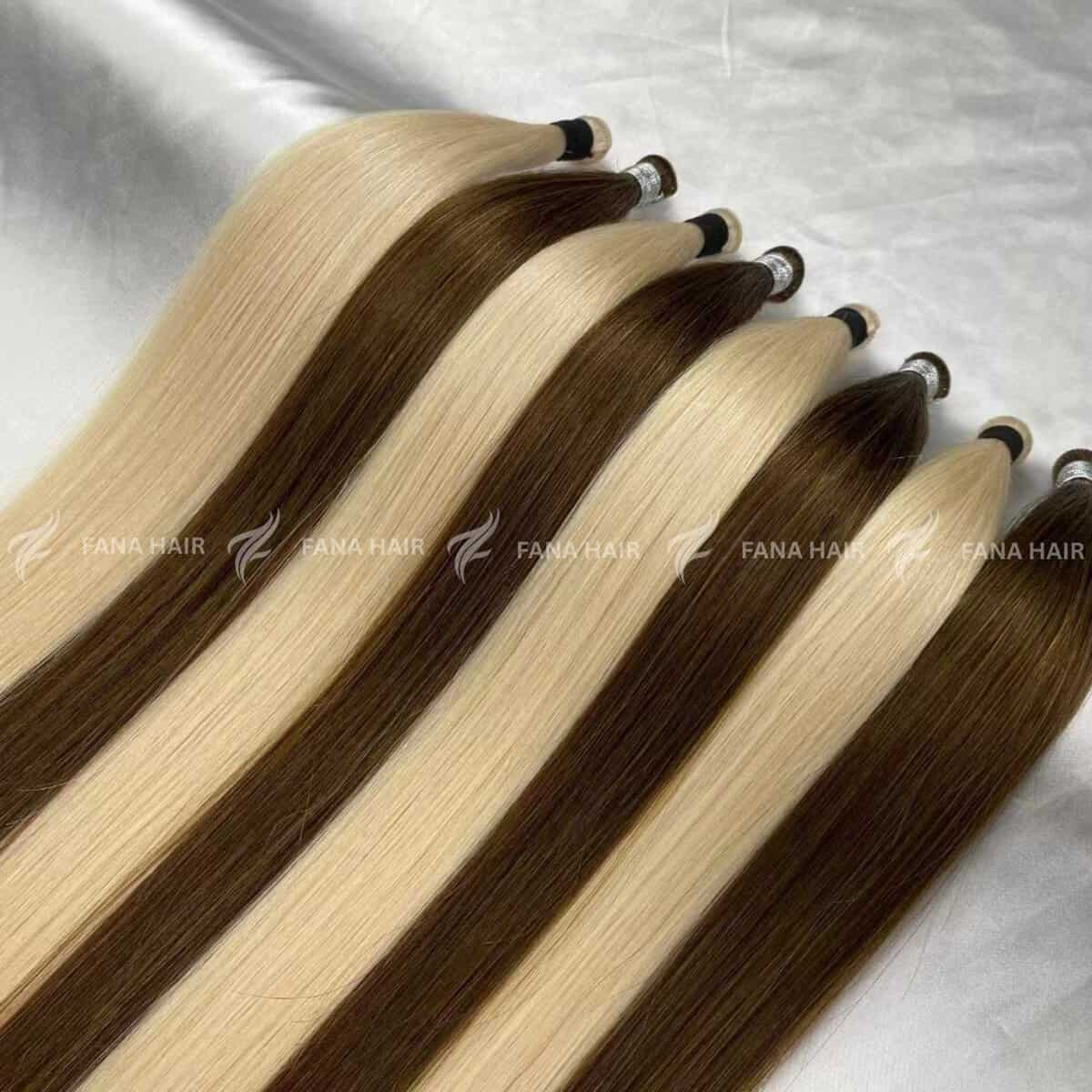
As an extension specialist, your artistry is only as good as your materials. When it comes to volume and length, wefts (or “curtains” of hair) are the go-to solution. But on your supplier’s website, you’re faced with a critical choice: Machine Weft, Hand-Tied Weft, or the new Genius Weft?
The difference between these three is not just a marketing gimmick. It fundamentally changes the application, the final look, and your client’s comfort.
The choice comes down to the seam—the thin track at the top where the hair is bound together. Let’s break down all three so you can choose the perfect weft for every client.
1. The Machine Weft: The Classic Workhorse
This is the original, time-tested extension weft.
- What It Is: A “machine weft” is created by feeding bundles of hair through a sewing machine, which stitches them together into a thick, durable track. The hair is folded over and stitched, creating a secure seam.
- Pros:
- Cuttable: This is its biggest advantage. You can cut the weft anywhere along the track to perfectly customize the size to your client’s head.
- Durable: The machine-stitched seam is incredibly strong and resistant to shedding.
- High Density: These wefts pack a lot of hair onto a single track, making them perfect for achieving maximum volume quickly.
- Cost-Effective: They are less labor-intensive to produce, making them the most affordable option.
- Cons:
- Bulky Seam: The track is thicker and more rigid than other types. This can be harder to hide on clients with fine hair and may feel bulkier.
- “The Beard”: The “return hair” (the short hairs at the top where the hair is folded over) can sometimes be felt by clients with sensitive scalps.
- Best Application:
- Traditional Sew-Ins: The durable track is perfect for sewing onto a braided foundation.
- Clients with Medium-to-Thick Hair: Their natural density can easily hide the thicker seam.
- Maximum Volume: Ideal for clients who want the most “bang for their buck” in terms of density.
2. The Hand-Tied Weft: The Invisible Luxury
This is the ultra-premium option that revolutionized the industry, especially for braidless methods.
- What It Is: A “hand-tied weft” is made entirely by hand. Skilled artisans meticulously tie individual strands of hair onto a thin, strong thread, creating the thinnest, most flexible weft imaginable.
- Pros:
- Ultra-Thin Seam: This is its superpower. The seam is a tiny, flexible micro-thread that lays completely flat against the scalp, making it the most invisible, discreet option.
- Lightweight & Comfortable: Clients often say they “can’t even feel them.”
- Perfect for Fine Hair: This is the only choice for clients with fine, low-density hair, as it blends seamlessly without creating bumps or ridges.
- Cons:
- CANNOT BE CUT: This is the golden rule. Because it’s a hand-knotted chain, cutting the weft will cause the entire piece to unravel. You must fold the weft over to fit a section.
- More Expensive: They are extremely labor-intensive to create, which is reflected in their premium price.
- Less Dense (Per Weft): Each individual weft is finer, so you must “stack” multiple wefts (e.g., 3-5) to achieve the same density as one machine weft.
- Best Application:
- Beaded Weft Methods: (Braidless Sew-Ins, Natural Beaded Rows, etc.) This is what they were designed for.
- Clients with Fine or Thin Hair: The invisible seam is a non-negotiable for this client type.
- Clients who prioritize comfort and a lightweight, “no-extension” feel.
3. The Genius Weft: The “Best of Both Worlds” Hybrid
This is the new kid on the block, a game-changing technology that solves the problems of the other two.
- What It Is: The “Genius Weft” is a new innovation. It’s made by a machine, but it creates a seam that is as thin and flexible as a hand-tied weft. It’s the ultimate hybrid.
- Pros:
- Cuttable: This is the revolution. You get the thinness of a hand-Tied weft with the versatility of a machine weft. It can be cut anywhere without unraveling or shedding.
- Ultra-Thin Seam: Lays just as flat and is just as discreet as a hand-tied weft.
- No “Beard”: It’s built differently from a traditional machine weft, so it has no “return hair,” making it more comfortable for sensitive scalps.
- Durable: More durable than a delicate hand-tied weft.
- Cons:
- Newer Technology: As a new, advanced product, it may be priced higher than a traditional machine weft.
- Best Application:
- Everything. It’s perfect for Beaded Weft methods (it lays flat) and traditional sew-ins (it’s durable and cuttable).
- All Hair Types: Discreet enough for fine hair, durable enough for thick hair.
- Stylists: The perfect “one-size-fits-all” inventory item for stylists who want maximum flexibility.
Comparison at a Glance
| Feature | Machine Weft (Classic) | Hand-Tied Weft (Luxury) | Genius Weft (Hybrid) |
| Track Thickness | Thick & Durable | Ultra-Thin & Flexible | Ultra-Thin & Flexible |
| Can You Cut It? | YES | NO (Do Not Cut!) | YES |
| “Return Hair/Beard” | Yes (can be itchy) | No | No (Very comfortable) |
| Best For… | Thick Hair, Traditional Sew-Ins | Fine Hair, Beaded Rows | All Hair Types, All Methods |
| Price | $ | $$$ | $$ |
Which Weft Should You Choose?
- Choose Machine Wefts for your high-volume, traditional sew-in clients with thick hair.
- Choose Hand-Tied Wefts for your high-end, fine-haired clients who are getting beaded rows and prioritize an invisible feel above all else.
- Choose Genius Wefts for… well, almost everyone. It’s the versatile, problem-solving weft that gives both you and your client the best of all worlds: thin, comfortable, and fully customizable.
Leave a Reply