Welcome to the world of hair extensions! As a new stylist, you’ve chosen to learn one of the most transformative and profitable skills in the salon industry. Extensions can turn a client’s dream hair into a reality, giving them the length, volume, or color they’ve always wanted.
But before you can master the application, you must first master the language. The world of extensions is filled with specific terms that define product quality, application methods, and the final result. Using this terminology correctly is the first step to becoming a trusted extension expert.
This guide will break down the fundamental concepts every new extension artist needs to know.
1. What Are Hair Extensions?
At its simplest, hair extensions (also known as “hair weaves” or “hair integration”) are strands or wefts of human or synthetic hair that are attached to a client’s natural hair.
The goal is to:
- Add length
- Add volume and fullness
- Add color (highlights, lowlights, or fantasy shades) without chemicals
- Correct a bad haircut or fill in sparse areas
2. The First Choice: Human Hair vs. Synthetic Hair
This is the most basic and important distinction in quality.
- Human Hair: This is the professional standard. As the name implies, it’s 100% real human hair, sourced from donors. It can be heat-styled (curled, straightened), colored, and washed just like your client’s own hair. It moves naturally, lasts for months (or even a year+ with care), and blends seamlessly.
- Synthetic Hair: This is made from fine plastic or polymer fibers designed to mimic hair.
- Pros: It’s much cheaper and often comes pre-styled (e.g., it will hold a curl permanently).
- Cons: Most synthetic hair cannot be heat-styled (it will melt) or colored. It has an unnatural shine and is prone to tangling and frizzing. It’s best for temporary, clip-in, or costume use, not for professional, long-term salon installations.
Pro-Tip: As a professional stylist, you should almost exclusively work with 100% human hair to guarantee quality and build a high-end reputation.
3. The Quality Test: Remy vs. Non-Remy Hair
This is the most critical concept to understand when purchasing human hair. The difference lies in the cuticle. The cuticle is the outermost, protective layer of the hair strand.
- Remy Hair: This is the gold standard of human hair. In Remy hair, all cuticles are intact and aligned in the same direction (root-to-tip), just as they would grow from your head. This alignment prevents tangling, matting, and friction, keeping the hair smooth and healthy-looking for its entire lifespan.
- Non-Remy Hair: This hair is collected from various sources (like salon floors or brushes) without keeping the roots and tips aligned. The cuticles are facing in all different directions.
- To disguise this, manufacturers often strip the cuticles off with a strong acid bath and then coat the hair in silicone to make it feel smooth and silky in the package.
- The Problem: After a few washes, the silicone wears off, and the misaligned cuticles snag on each other, causing massive, irreversible tangling and matting.
Never use Non-Remy hair on a client. It may be cheap, but it will destroy your reputation.
4. The Fullness Factor: Single Drawn vs. Double Drawn
This classification tells you about the density and fullness of the hair ends. It refers to the sorting process the hair goes through.
- Single Drawn (SD): A bundle contains strands of many different lengths, just like natural hair. It will be thick at the top (root) and taper off to thinner ends. This is a good, affordable option for a very natural, layered look.
- Double Drawn (DD): The hair goes through a second sorting process to remove most of the shorter strands. This means a Double Drawn bundle is thick and full from the root all the way to the ends. This is the luxury standard that most clients picture when they want “full” hair.
- Super Double Drawn (SDD): The most premium grade. Almost 100% of the strands are the same length, creating ultimate, uniform density.
5. The Application Methods: A Quick Overview
Finally, “hair extensions” is a broad category. The term is often used to describe the method of attachment. Here are the main types you’ll hear about:
- Wefts (or Sew-Ins): A “weft” is a curtain of hair that has been sewn together at the top. This weft is then applied to the client’s head, often by sewing it onto a braided track (“cornrow”) of the client’s own hair.
- Tape-Ins: Small wefts of hair attached to a thin, double-sided, medical-grade tape. You “sandwich” a thin section of the client’s natural hair between two tape-in pieces. They are known for being fast to apply and laying very flat.
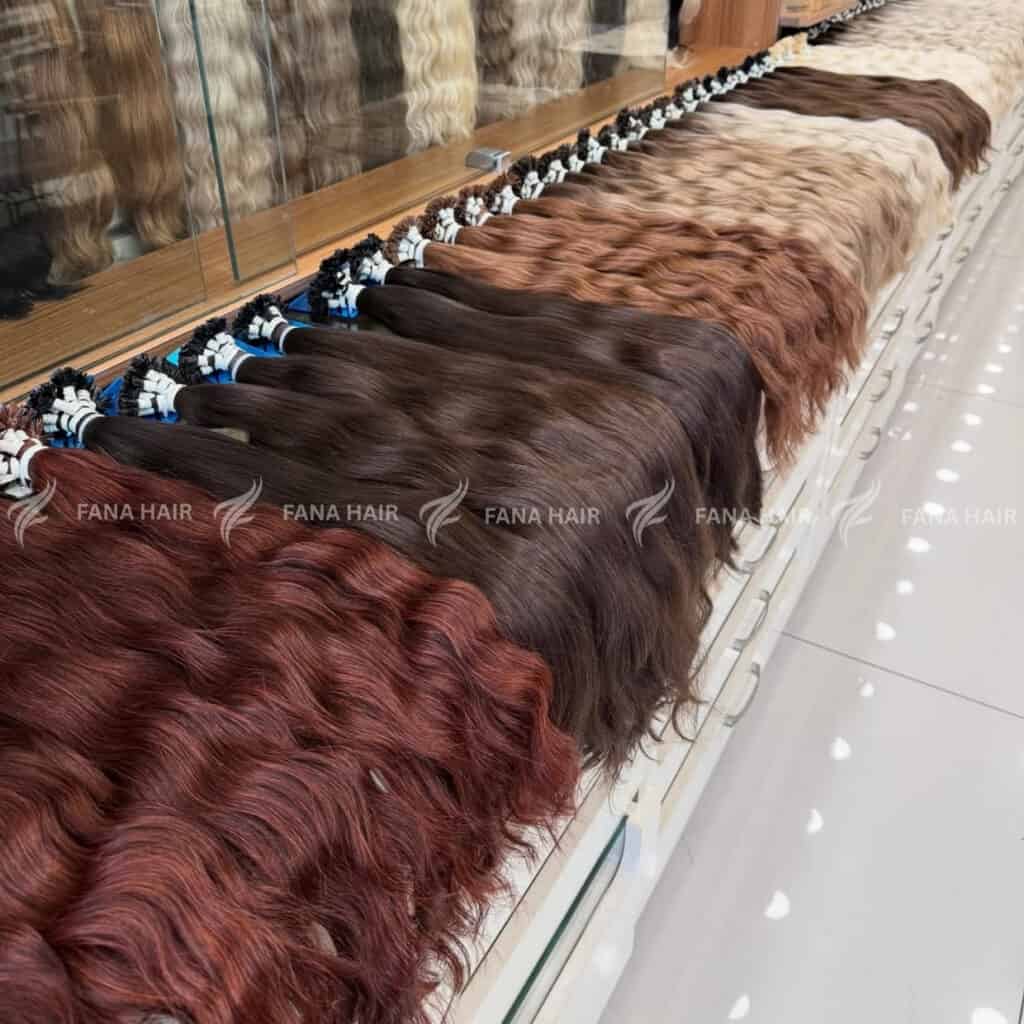
- Keratin Bond (Hot Fusion / U-Tip): A strand-by-strand method. Individual extension strands are tipped with a keratin-based polymer. You use a special heat tool to melt this bond and fuse it to the client’s natural hair.
- Micro-Link (Cold Fusion / I-Tip / Micro-Bead): Another strand-by-strand method, but it uses no heat or glue. An individual extension strand (with an “I-shaped” tip) is threaded through a tiny bead or cylinder along with a small section of the client’s hair. You then use pliers to clamp the bead shut.
Your Foundation is Set
Understanding these five core concepts—what extensions are, human vs. synthetic, Remy vs. Non-Remy, drawn types, and basic application methods—is your foundation.
When you can confidently explain to a client why you use 100% Remy Double Drawn hair, you are no longer just a stylist. You are an expert consultant, and that is the key to a successful career in hair extensions.
Leave a Reply