Choosing a hair extension method is the single most important decision you and your client will make. The internet is flooded with opinions, but the truth is, there is no single “best” method.
The “best” method is the one that is perfect for your client’s specific hair type, lifestyle, budget, and desired result.
As a professional, it’s your job to be the expert consultant. To do that, you need to know the unique pros and cons of every major technique. Let’s put the five most popular methods side-by-side in the ultimate showdown.
1. Tape-In Extensions
- What They Are: Thin (1-inch) wefts of hair pre-taped with a medical-grade adhesive. A thin slice of the client’s natural hair is “sandwiched” between two of these wefts.
- PROS:
- Speed: This is the fastest semi-permanent application method. A full head can be done in 60-90 minutes.
- Lays Flat: The wefts are paper-thin and flexible, making them incredibly flat and comfortable.
- Great for Fine Hair: Their light, flat design puts minimal strain on the hair, making them ideal for fine-haired clients.
- Reusable: The hair can be removed, re-taped, and re-installed multiple times.
- CONS:
- Cure Time: Requires a 48-72 hour waiting period after application before washing or sweating, allowing the bonds to cure.
- Vulnerable to Oils: The adhesive can be broken down by oils, silicones, and alcohol. This is not the best method for clients with very oily scalps or those who use many products.
- Less Ponytail Freedom: The flat, 1-inch wefts are less flexible for high ponytails than strand-by-strand methods.
- Best For: The client who wants a fast, affordable, and comfortable service. Ideal for fine-to-medium hair and clients who are good with aftercare.
2. Keratin (Hot Fusion / U-Tip)
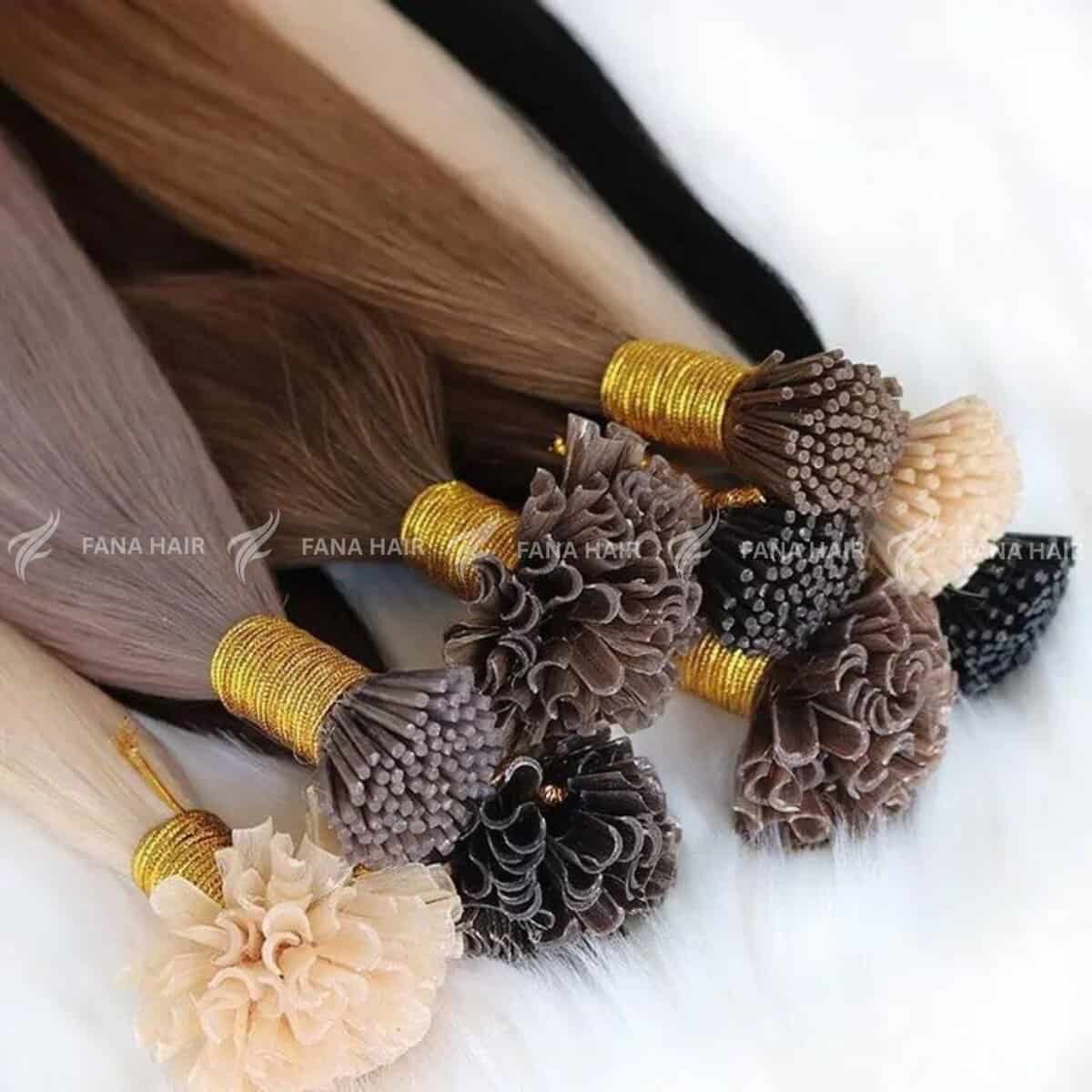
- What They Are: A strand-by-strand method. Individual extensions are tipped with a U-shaped keratin polymer, which is melted and fused to the client’s natural hair using a special heat tool.
- PROS:
- Ultimate Discretion: The bonds are tiny, “rice-shaped,” and can be custom-colored, making them the most “invisible” method.
- 360-Degree Movement: The strand-by-strand application allows for the most natural movement. High ponytails are easy and undetectable.
- Durability: This is the longest-lasting method. The bonds are very secure and can be worn for 3-5 months without maintenance.
- Secure: Great for active lifestyles.
- CONS:
- Application Time: This is a meticulous, luxury service. A full application can take 3-5 hours.
- Heat & Adhesive: The use of heat and a bonding agent is a concern for some clients.
- Difficult Removal: Removal is a long process that requires a special solvent and pliers. The hair is not easily reusable (it must be professionally re-tipped).
- Price: This is typically the most expensive extension service.
- Best For: The client with medium-to-thick hair who wants a long-term, “wear-it-and-forget-it” solution and who prioritizes discretion and styling freedom above all else.
3. I-Tip (Micro Ring / Cold Fusion)
- What They Are: A strand-by-strand method that uses no heat or glue. An “I-shaped” extension tip is threaded into a tiny micro-ring (bead) along with the client’s natural hair, and the bead is clamped shut.
- PROS:
- No Heat or Glue: This is its #1 selling point. It’s a purely mechanical, non-damaging method.
- 100% Reusable: The hair is easily reusable.
- Easy Maintenance: Maintenance is fast. The beads can be opened, “bumped up” to the root, and re-clamped.
- 360-Degree Movement: Offers the same strand-by-strand freedom as fusion.
- CONS:
- Application Time: A long, strand-by-strand application (2-4 hours).
- Slippage: Can be prone to slipping on very fine or oily hair.
- Comfort: The metal beads can feel “harder” against the scalp than flat tapes or soft fusion bonds, especially for the first few nights.
- Visibility: The beads, while small, can be more visible in very fine hair than keratin bonds.
- Best For: The client who is strictly against heat or glue. Ideal for those who prioritize reusability and want strand-by-strand discretion.
4. Traditional Sew-In (with Braids)
- What They Are: Wefts of hair are sewn onto a foundational “track” of the client’s own braided-down hair (cornrows).
- PROS:
- Maximum Volume: The best method for achieving full coverage and high-density, voluminous looks.
- Protective Style: The client’s natural hair is completely braided away, protecting it from daily styling and damage.
- No Heat or Glue: A purely mechanical method.
- Secure: Extremely secure and durable; can be worn for 6-8 weeks.
- CONS:
- Not for Fine Hair: This method is not suitable for fine, low-density, or Caucasian hair. The tension from the braids can be damaging.
- Bulky & Heavy: Can feel heavy, and the braided foundation can feel lumpy.
- Scalp Hygiene: It’s difficult to wash and (more importantly) dry the braids underneath, which can lead to scalp irritation or mildew if not cared for.
- Best For: Clients with medium-to-thick, coarse, or highly-textured hair who want a protective style with maximum volume.
5. Beaded Weft (Braidless Sew-In)
- What They Are: A modern hybrid. Wefts of hair are sewn onto a “track” made not of braids, but of micro-beads and the client’s natural hair.
- PROS:
- Best of Both Worlds: Gives the high-impact volume of a sew-in with the flatness and comfort of a bead.
- No Heat, No Glue, No Braids: Very safe, comfortable, and non-damaging.
- Fast Application: Much faster to apply than strand-by-strand methods.
- Lays Incredibly Flat: Especially when using hand-tied wefts, this method is very discreet and comfortable.
- Easy Maintenance: “Move-up” appointments are fast and simple.
- CONS:
- Not for Ultra-Fine Hair: While much better than a traditional sew-in, the tracks can still be visible on clients with very thin hair at the crown.
- Less Ponytail Freedom: A weft-based method is less flexible for high ponytails than strand-by-strand.
- Best For: The “ideal” modern client. Anyone with fine, medium, or thick hair who wants maximum volume with minimum application time and prioritizes hair health.
The Final Verdict
There is no “one-size-fits-all” winner. The perfect extension method is a personalized prescription. The key is a thorough consultation where you analyze your client’s hair, listen to their lifestyle, and help them choose the method that will make them look and feel their absolute best.
Leave a Reply