
As a professional stylist, “My hair is too thin” is one of the most common concerns we hear from clients in our chair. These clients dream of the volume and length that extensions provide, but they are also (rightfully) terrified.
For clients with fine, thin, or weak hair, the wrong extension method isn’t just a bad look—it’s a recipe for disaster that can lead to tension, breakage, and even traction alopecia.
This client is placing an incredible amount of trust in you. It’s your professional duty to set realistic expectations and choose a method that prioritizes the health and integrity of their natural hair above all else.
So, which methods are truly safe, and which should you avoid at all costs? Let’s break down the options.
The Goal: Low Tension, Wide Distribution
The key to safely applying extensions on fine hair is to follow two rules:
- Low Tension: The method cannot create a strong, consistent “pull” on the hair follicle.
- Wide Distribution: The weight of the extension hair must be distributed over a wide area, not concentrated on a few, weak strands.
The Safest Choices: The “Yes” List
These methods are specifically designed to be lightweight and gentle, making them ideal for fine-haired clients.
1. Tape-In Extensions
This is, by far, the most popular and widely recommended method for fine hair, and for good reason.
- Why It Works: Tape-ins are thin, 1-inch wefts that lay completely flat. When you create a “sandwich,” the weight of the weft is distributed over a 1-inch section of the client’s hair. This is much safer than a single-point bond. The tabs are flexible, lightweight, and put virtually no tension on the root.
- The Pro-Move: For clients with ultra-fine hair at the temples or sides, you can use the “single-sided” tape method. You apply just one tape weft and use a single-sided replacement tab on the other side. This cuts the weight in half and is virtually invisible.
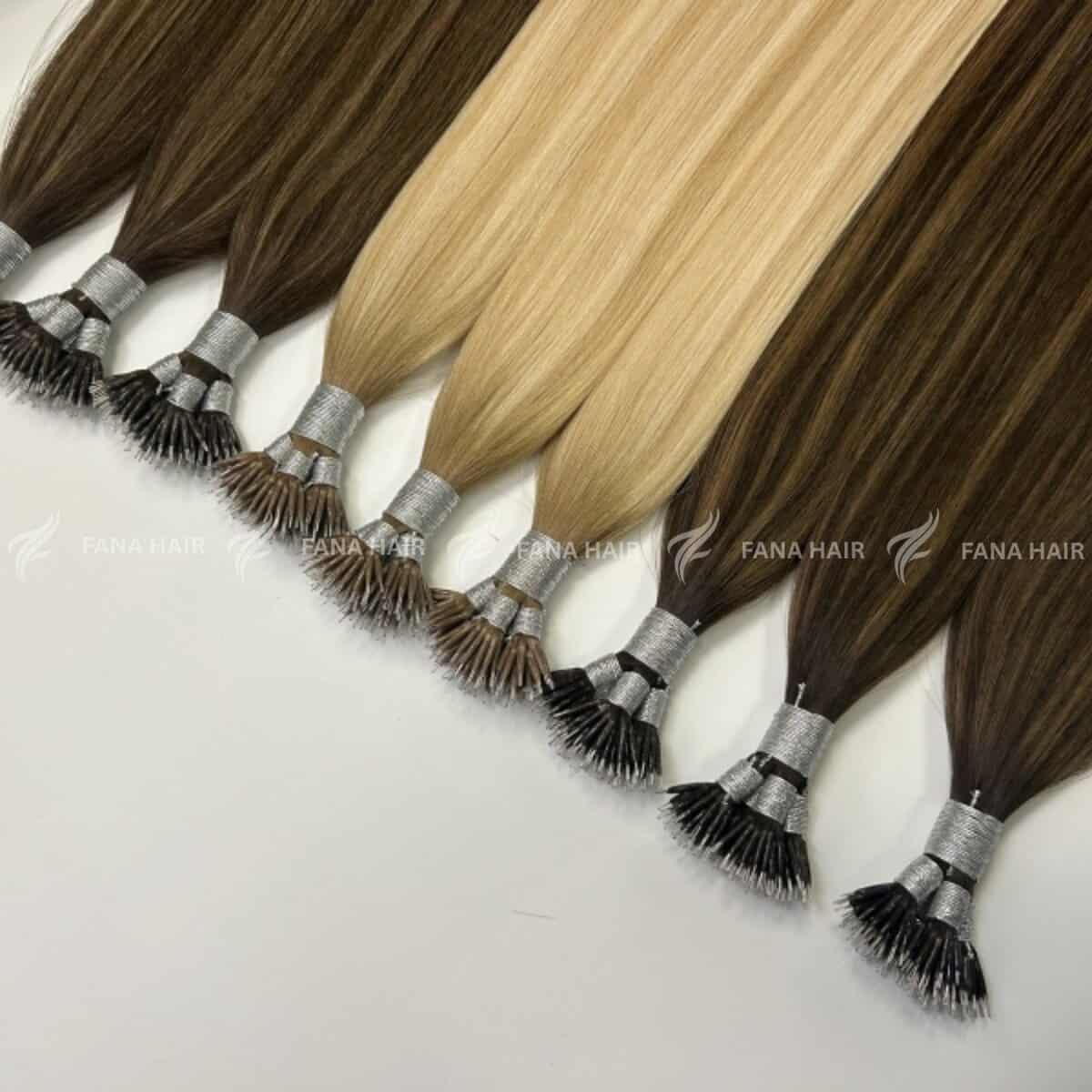
2. Nano-Ring Extensions
If your fine-haired client wants the 360-degree movement of a strand-by-strand method, Nano Rings are the answer.
- Why It Works: Nano rings were invented for fine hair. The beads are approximately 90% smaller than a traditional micro-ring, making them incredibly lightweight and undetectable. Because the bead and the extension strand are so tiny, they put minimal stress on the client’s delicate natural strand.
- The Caveat: This method is meticulous and time-consuming. You must be extremely precise in matching the weight of the client’s strand to the nano-extension.
The “Use With Extreme Caution” List
These methods can work, but they carry a much higher risk and should only be performed by a highly experienced, certified specialist.
1. I-Tip (Micro Ring / Cold Fusion)
- The Risk: A standard micro-ring (bead) is often too heavy and bulky for truly fine hair. It can be easily seen, and the weight of a standard I-Tip strand can be too much for a single, weak strand of natural hair to support. The risk of slippage (from oily scalps, common with fine hair) is also higher.
- When It Might Work: If you are a specialist who can custom-make or source very light I-Tip strands (e.g., 0.5g) and you are meticulous about the one-to-one weight ratio. In most cases, you’re better off just using nano rings.
2. Keratin (Hot Fusion / U-Tip)
- The Risk: Like I-Tips, a standard 1-gram keratin bond is far too heavy. The heat application can be risky for already-weak hair, and the removal process (which involves an alcohol-based solvent and crushing the bond) can be stressful and lead to breakage if not done perfectly.
- When It Might Work: A master technician can custom-cut the U-tips into “micro-bonds,” (half or even quarter bonds). This creates a tiny, lightweight, and discreet bond. However, this is an advanced, time-consuming technique that requires a very high skill level.
The “Do Not Use” List
For the health and safety of your client, you should professionally decline to use these methods on clients with fine or weak hair.
1. Traditional Sew-In (with Braids)
- Why It’s a “No”: This is the worst possible choice. The tight braids create massive tension on the entire scalp, a direct cause of traction alopecia. The wefts are heavy, the braids are bulky, and the method is completely unsuitable for fine hair.
2. Beaded Wefts (Braidless Sew-In)
- Why It’s a “No”: While this is a fantastic method for medium-density hair, it’s still too much for truly fine hair. The weight of an entire weft (even a hand-tied one) is supported by a few “bead points.” This creates too much tension on those small sections of hair. The track itself, while flat, will be very visible.
The Final Verdict & Professional Advice
For the vast majority of your fine-haired clients, Tape-In Extensions are the safest, most comfortable, and most effective solution. They provide the beautiful, natural volume they crave without compromising the health of their hair.
If the client is set on a strand-by-strand method, Nano Rings are your best-practice, premium alternative.
Final Pro-Tips for Your Consultation:
- Prioritize Volume, Not Length: Be honest with your client. Adding 24-inch extensions to fine hair is a bad idea. It will look unnatural and create too much weight. Recommend a modest length (e.g., 14-18 inches) to create a “full” and healthy look.
- Set Re-Installation Appointments: Fine-haired clients cannot push their maintenance appointments. They must come back every 4-6 weeks to prevent matting and manage natural shedding.
- Aftercare is Non-Negotiable: They must use a loop brush, sleep in a braid, and keep all oils and conditioners away from the bonds.
By guiding your client with expertise and honesty, you won’t just give them beautiful hair—you’ll earn their trust for life.
Leave a Reply